
2025-2026
Winners
Elementary School
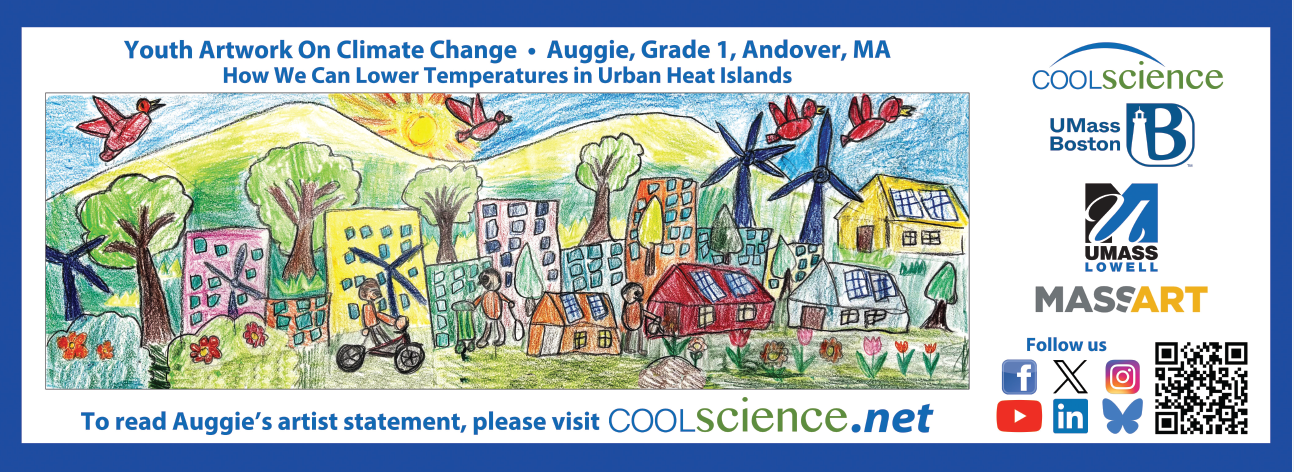
Auggie, a 1st grader from Andover, MA, is a Cool Science Winner. Congratulations Auggie!
Auggie’s Artist Statement: “My artwork is about helping the city and the Earth. It shows how we can save electricity by turning off the lights and using wind power. When we save electricity, it helps the planet stay healthy. I also wanted to show that recycling and not cutting down trees is important because people, animals, and plants all need fresh air to live. I made my artwork this way because I wanted people to understand my message easily. I drew a windmill because windmills make clean energy and do not make pollution. I used bright colors so my picture would stand out. I worked on coloring neatly and staying within the lines of my sketch. I also used shading to make my drawing look better. This art competition helped me learn new things. I learned how to shade, color more carefully, and draw a windmill. I learned that art can help teach people how to take care of the Earth. I was inspired by what I learned from my parents about climate change. I learned that the ozone layer is like a blanket around the Earth. When the Earth gets too warm, it can hurt the planet. I hope people who see my artwork learn that saving energy is important and that everyone can help protect the Earth, even kids like me.”
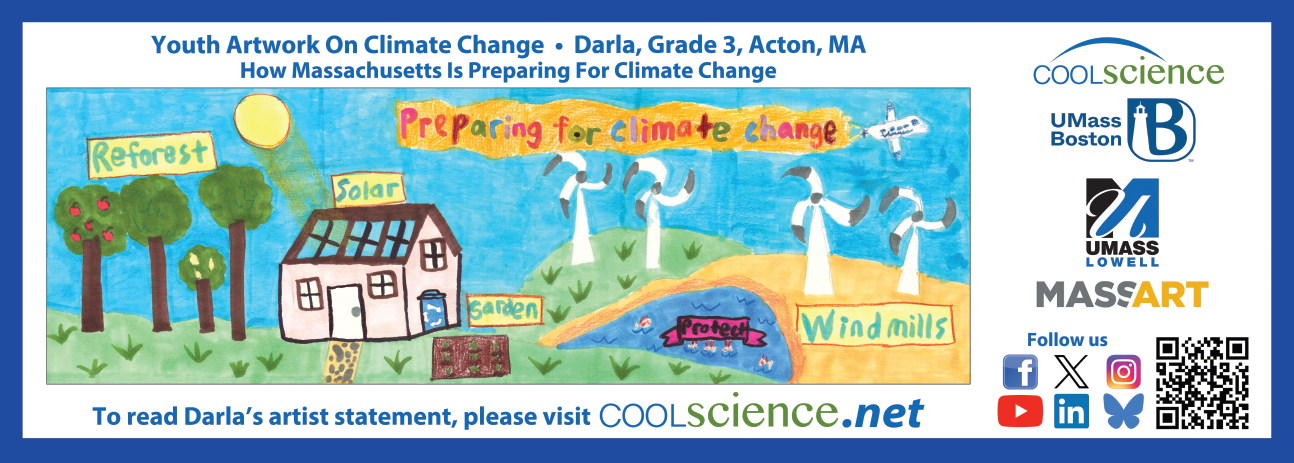
Darla, a 3rd grader from Acton, MA, is a Cool Science Winner. Congratulations Darla!
Darla’s Artist Statement: “It's important to prepare for climate change because the earth is getting hot and we need to cool it down. In my drawing I Included solar panels on the house, recycling bins and windmills. I also planted trees. I’m protecting the lake for clean water. I added windmills to make electricity. I made a garden to make my own food. I hope when people see my artwork I hope they do something about the climate. To help the climate we put solar panels on our roof. We also did other energy saving things in the house and yard. In the future I hope to do more.”
Middle School
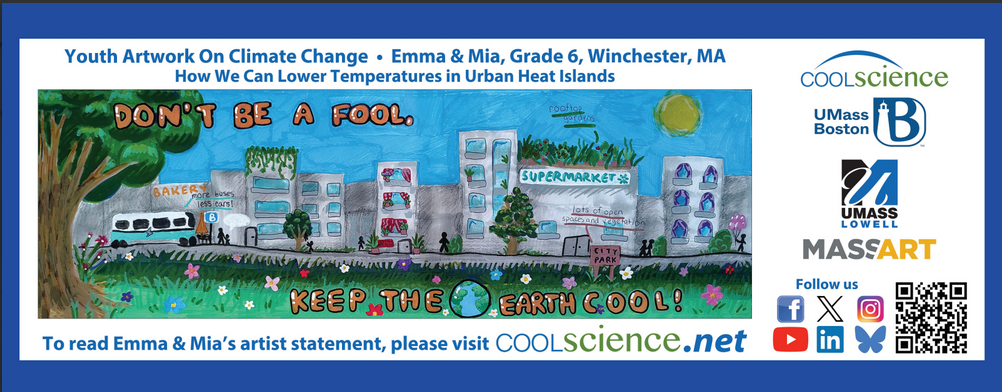
Emma & Mia, 6th graders from Winchester, MA are Cool Science Winners. Congratulations Emma & Mia!
Emma & Mia’s Artist Statement: “The challenge question we chose was, ‘How can we lower temperatures in Urban Heat Islands’. In our artwork we addressed the problem by adding more vegetation and lowering pollution. Rooftop gardens could add more plants in cities where there isn't that much space down on the ground. The heat builds up when buildings are packed too close together, so open spaces like parks help. What we are trying to say in our work is that there are a lot of things we can do to help this problem if we just put it to action. We created our artwork the way we did to show what the urban heat islands would look like if we used the ideas we came up with. This project did encourage us to use art projects in a new way because we had to figure out how to make this artwork a real vision that could actually work. We learned that if you want to come up with a good idea you have to use multiple people. What inspired us is that we knew that there were multiple easy solutions to this problem, it's just a matter of what us humans are willing to do. If people started just realizing what they are doing and even just slightly adjusted their lifestyle to think more about the planet and the consequences their actions could have, the effect would be magical. However, we know that not many people will be enthusiastic about this, and so we created some ideas that may appeal more to people: more buses instead of cars, rooftop gardens to boost vegetation, and more space for plants and parks. And these are just a few of our ideas!
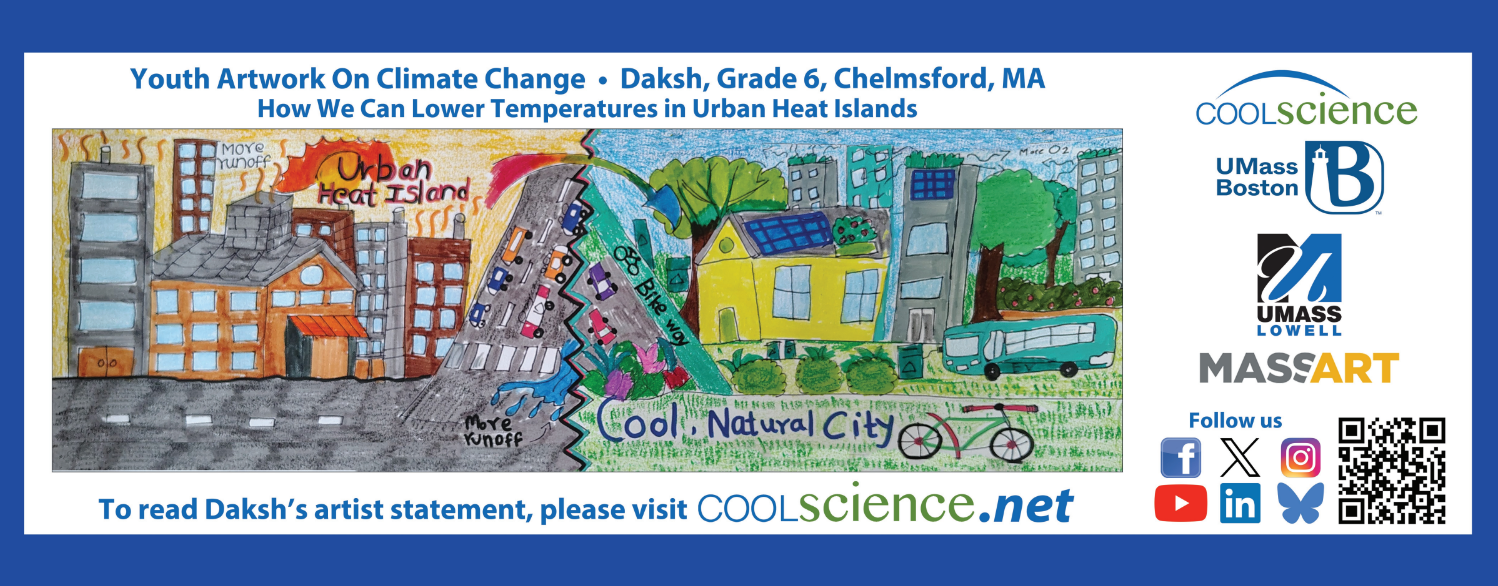
Daksh, a 6th grader from Chelmsford, MA, is a Cool Science Winner. Congratulations Daksh!
Daksh’s Artist Statement: “In my artwork I am showing how we can lower temperatures in urban heat islands. I personally believe that awareness of heat rising in urban areas must be recognized. Some solutions could be adding solar panels, trees and shades, EV cars, more parks, rainwater collectors, bike lanes, and cooling stations. I learned that urban heat islands are made of concrete and tar holding heat, other dark surfaces that trap heat inside, and cars and vehicles that emit carbon dioxide into the air. I created my artwork in this way because I wanted to use bright and bold colors to explain a problem that needs fixing. I hope you learn about urban heat islands and how we can reduce the temperatures. I was inspired by global warming and how to change it. I hope you enjoy my artwork.”
High School
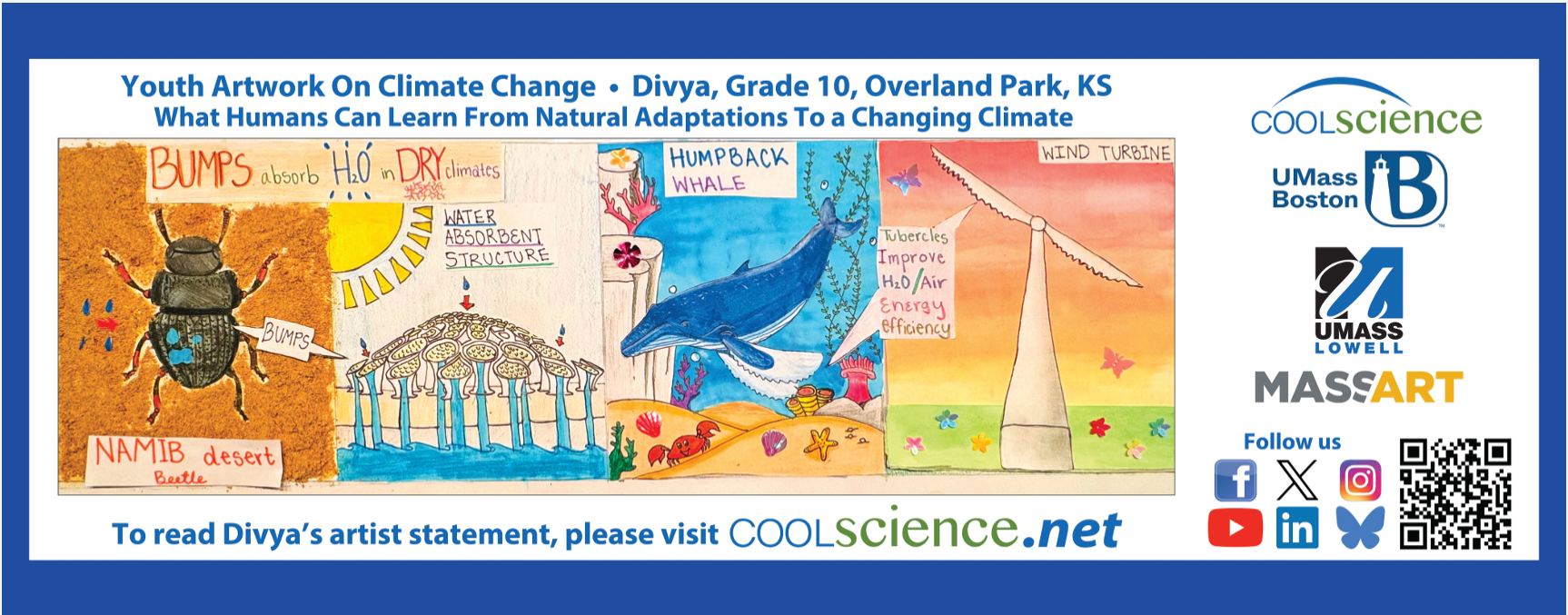
Divya, a 10th grader from Overland Park, KS, is a Cool Science Winner. Congratulations Divya!
Divya’s Artist Statement: “In my artwork, I addressed the challenge question, ‘What can we learn from nature about adapting to a changing climate?’ by incorporating the concept of biomimicry throughout my artwork. I did this by researching two remarkable creatures in nature: the Namib Desert Beetle and the Humpback Whale. I was drawn to the Namib Desert Beetle’s unique ability to collect water using the bumps on its back, known as fog harvesting. Its incredible adaptability in the arid Namib Desert led me to develop a water-absorbent structure with bumps arranged in a pattern similar to the Namib Desert Beetle. This installation features numerous elevated structures with protrusions that collect water in a parched environment. The water collected on the bumps is then filtered into a collection basin, where it is purified and made usable. Following this, the tubercles (small, rounded projections) on Humpback Whales further intrigued me. The tubercles enhance swimming performance in whales by increasing agility and enabling tighter turns and reduced drag. Likewise, tubercles can be installed on wind turbine blades to reduce drag and stall, thereby increasing efficiency by approximately 40% as compared to conventional wind turbines. In my artwork, I aim to communicate and teach people the innovative solutions that nature offers if we simply look for them. I created my artwork to convey information clearly, with solutions in nature positioned alongside their real-world counterparts. The art competition inspired me to work with materials in new ways by encouraging me to use new mediums and materials.”
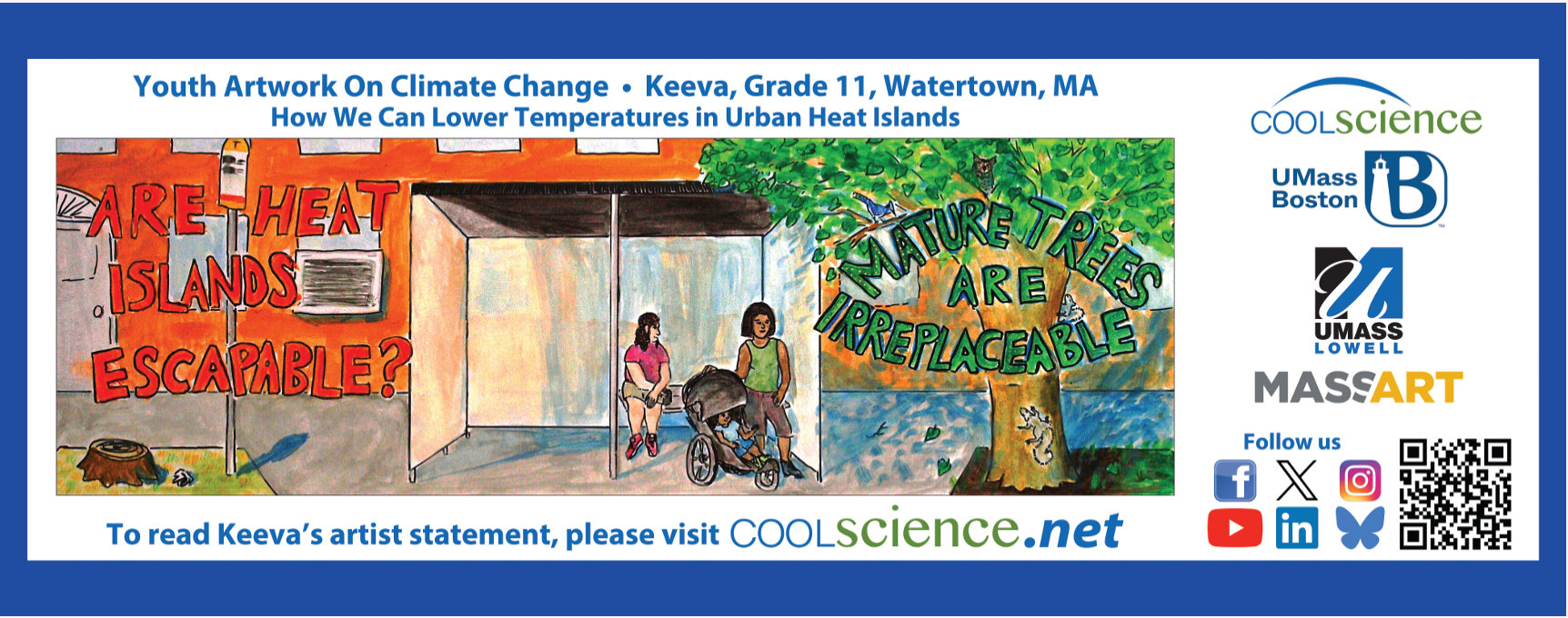
Keeva, an 11th grader from Watertown, MA, is a Cool Science Winner. Congratulations Keeva!
Keeva’s Artist Statement: “Many people in my neighborhood view urban trees as annoyances or liabilities. As the climate warms, heat islands are becoming more extreme. The shade provided by trees makes it possible for people to travel outside safely. Once a tree is gone, there’s no bringing it back; planting saplings won’t “make up for it”, because trees take decades to mature and get big enough to provide shade. My piece depicts people waiting at a bus stop. On one side, a tree has been cut down and there is no shade; the words ‘ARE HEAT ISLANDS ESCAPABLE?’, are painted using warm colors to convey a sense of heat. On the other side, a tall tree (appearance inspired by an American Basswood) provides shade. Wildlife nests in its branches. The words ‘MATURE TREES ARE IRREPLACABLE’ are painted using cool colors, curling into a softer, calmer shape to convey a sense of rest. In the middle is the bus stop; the people waiting for the bus have gathered at the shady side closer to the tree. My hope for this piece is that viewers will remember their own experiences of hot days with and without shade, reflect on how urban trees disrupt heat islands, and go into the future with an increased respect and understanding of the importance of urban trees.”
Runners-Up
Elementary School
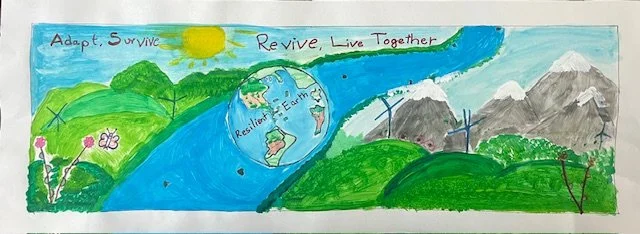
Ikhlass, a 4th grader from Methuen, MA, is a Cool Science Runner-Up. Congratulations Ikhlass!
Ikhlass’s Artist Statement: “I responded to the challenge question, What can we learn from nature about adapting to a changing climate? by thinking about how both people and nature face challenges. After storms and natural disasters caused by severe weather, nature may look damaged at first, but over time it recovers and becomes beautiful again. This ability to heal and continue growing shows resilience, which is an important lesson for humans as we face climate change. My artwork shows that people are similar to nature. Just as nature adapts in order to survive, humans must also adapt so we can survive, recover, and live together in harmony. The main message of my artwork is that adapting, surviving, reviving, and living together are necessary for both humans and the Earth. I used elements of nature in my artwork to represent a strong and resilient Earth. When people care for the planet and act responsibly, nature thrives. However, pollution and the loss of green spaces cause the Earth to weaken, just as people struggle when they are not in a healthy environment. This connection shows how closely human well-being is connected to the health of the planet. I hope viewers understand that taking care of the Earth also means taking care of ourselves. When nature is protected, humans are protected too. This project encouraged me to experiment with art materials in new ways, helping me better express my ideas. I learned that nature can heal itself, but still needs care.”
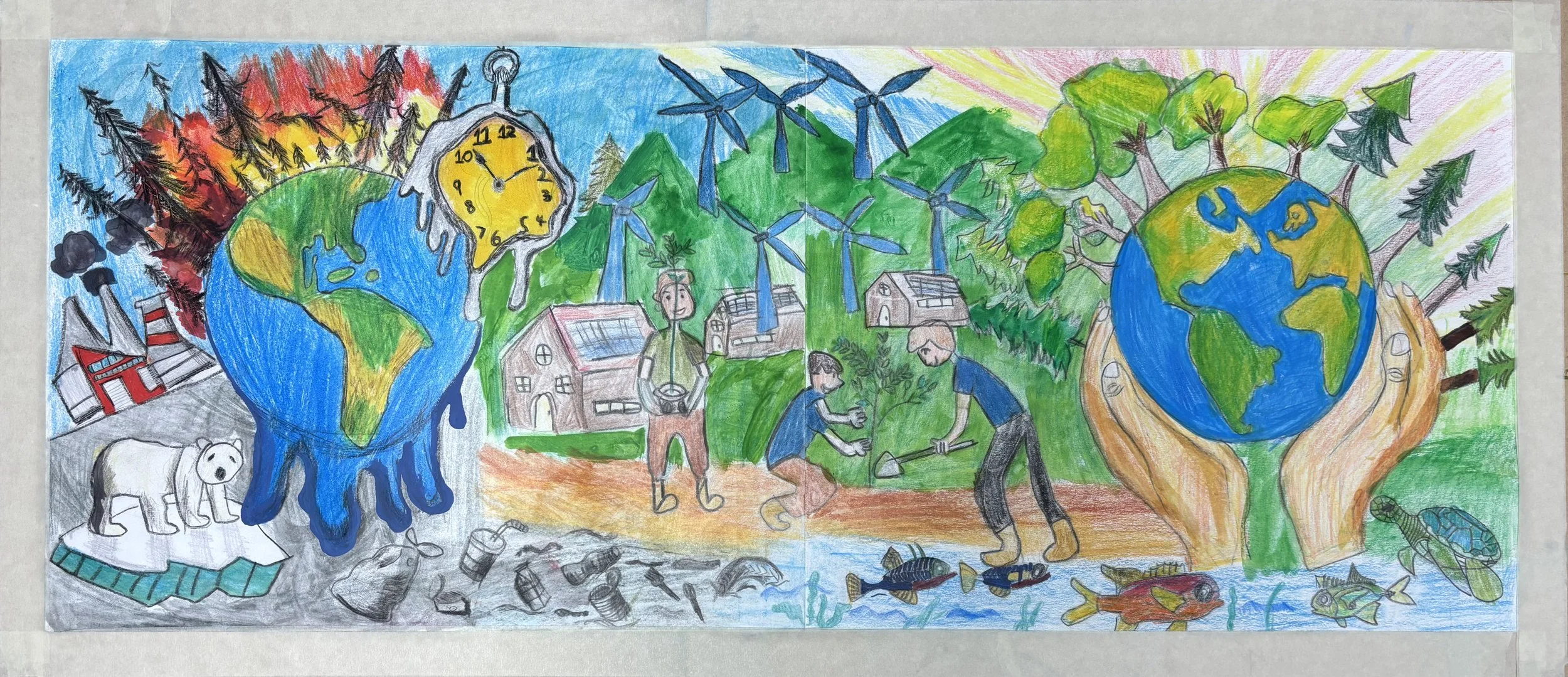
Anderson, a 4th grader from Andover, MA, is a Cool Science Runner-Up. Congratulations Anderson!
Anderson’s Artist Statement: “I drew trees, plants to make temperatures in city lower. And I also drew solar panels and wind turbines, for clean energy. I am trying to say that we should use clean energy instead of gasoline and other harmful gases. I created it so that people can see what the world will look like if we used clean energy instead of harmful energy. The art competition encouraged me to use new art supplies and use old ones in a new way. I hope people will see the danger harmful gases can do. I learned that dirty gases can impact the environment in a lot of ways. I was inspired by the impact the gases can do if we don’t act fast.”
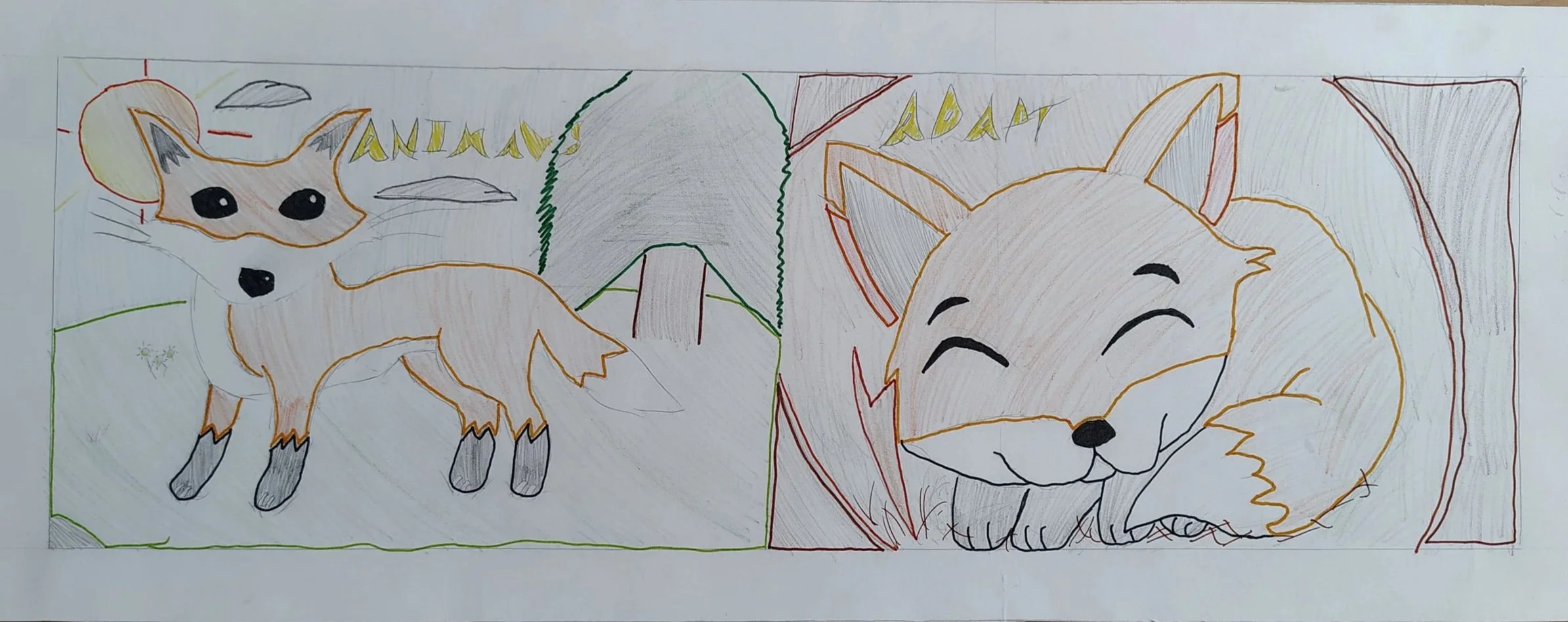
Owen, a 4th grader from Great Bend, KS, is a Cool Science Runner-Up. Congratulations Owen!
Owen’s Artist Statement: “I answered how animals change in different climates. What I’m trying to say in my art work is that animals adapt in different climates. The reason I created my artwork in the way I did, was because I love foxes. The competition encouraged me to work with new art materials. I ended up outlining with markers. What I hope people will learn from my artwork is that animals change in different climates, and we can continue to adapt to changes as well. While I was at it I learned how to spell animals. I was inspired by challenging other people’s artwork.”
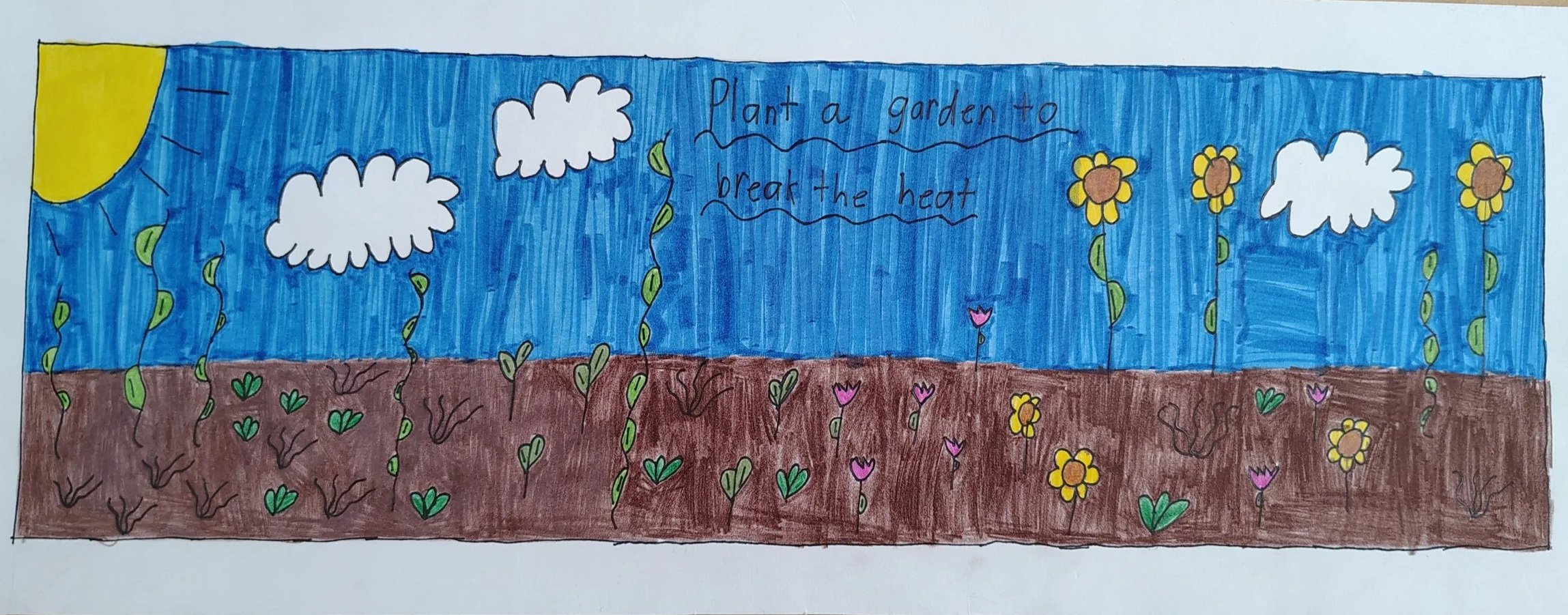
Claire, a 4th grader from Great Bend, KS, is a Cool Science Runner-Up. Congratulations Claire!
Claire’s Artist Statement: “I drew a garden to teach people about a way to lower temperatures in urban heat islands. I am trying to say in my artwork that you can plant a garden to lower temperatures. I used a marker to make the sky brighter. No, the art competition did not encourage me to work with art materials in a new way. I hope people will learn that by planting a garden you can reduce heat. I learned ways to reduce heat. I was inspired by coming up with answers to the questions and drawing them.”
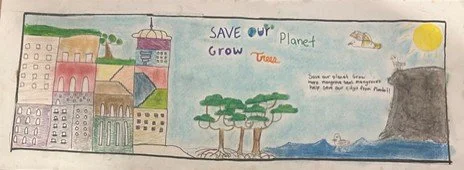
Emily & Grace, 5th graders from Amherst & Holyoke, MA, are Cool Science Runners-Up. Congratulations Emily & Grace!
Emily & Grace’s Artist Statement: “The prompt we used was, ‘What can we learn from nature about adapting to a changing climate?’ You might think that building expensive and time-consuming seawalls are the best option for rising tides. But the solution doesn't have to be large or grand. Even though mangrove seeds are small, they can save hundreds of seaside cities. We can use nature as a resource in an earth friendly way. And at the same time save money and lives. We wanted to make the poster eye catching, and really tell people that new technology is not always the solution. We used fading methods and used pastels almost like a watercolor pallet with no water. This experience really taught us to focus on the little details. Even though man-made resources are more common, if you plant a few mangrove trees, it can help reduce the amount of seaside cities getting flooded by climate change. In the past, we thought new and improved seawalls, were the best option for climate change. But now we believe that nature is the way to go. Mangroves really do help our cities for the better!”
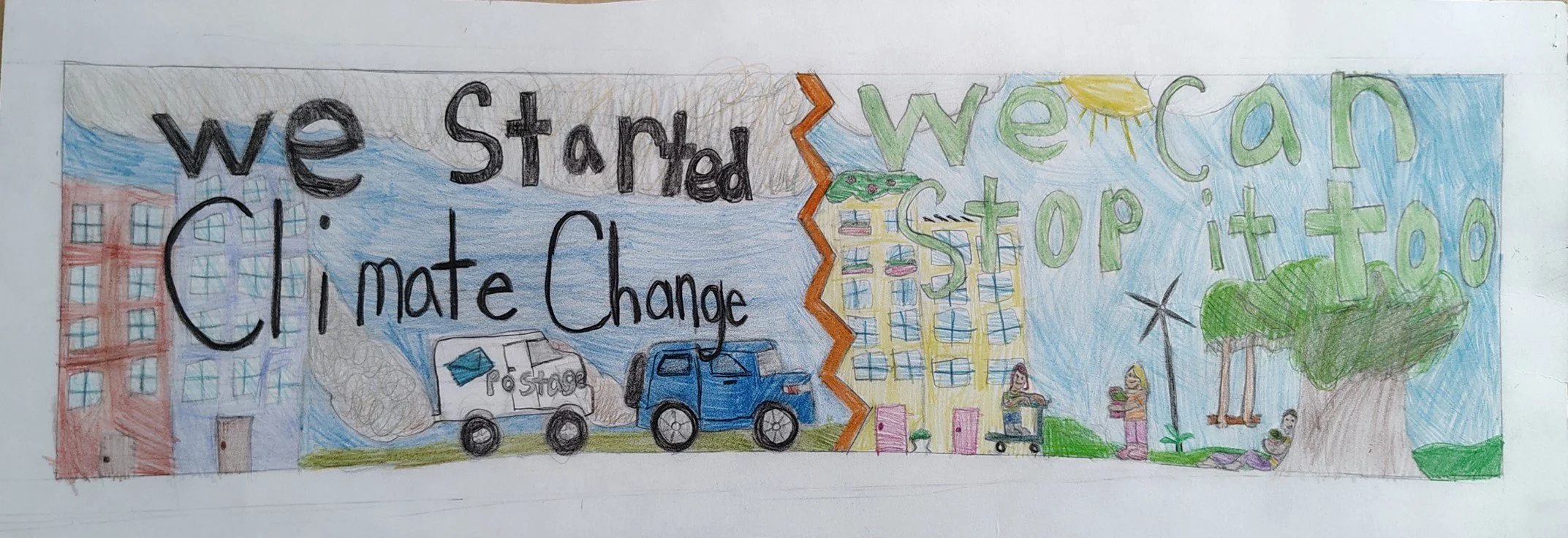
Ariana, a 5th grader from Great Bend, KS, is a Cool Science Runner-Up. Congratulations Ariana!
Ariana’s Artist Statement: “I’m trying to say that we should try to reduce and/or stop climate change. I created it the way I did because I didn’t know how else I would or could. Not really I used the resources I had as best as I could. I hope they learn that you can reduce climate change in little ways within your daily life. I learned about ways we can reduce climate change just by creating less pollution. I was inspired by the fact that we have the capability to reduce and possibly stop climate change.”
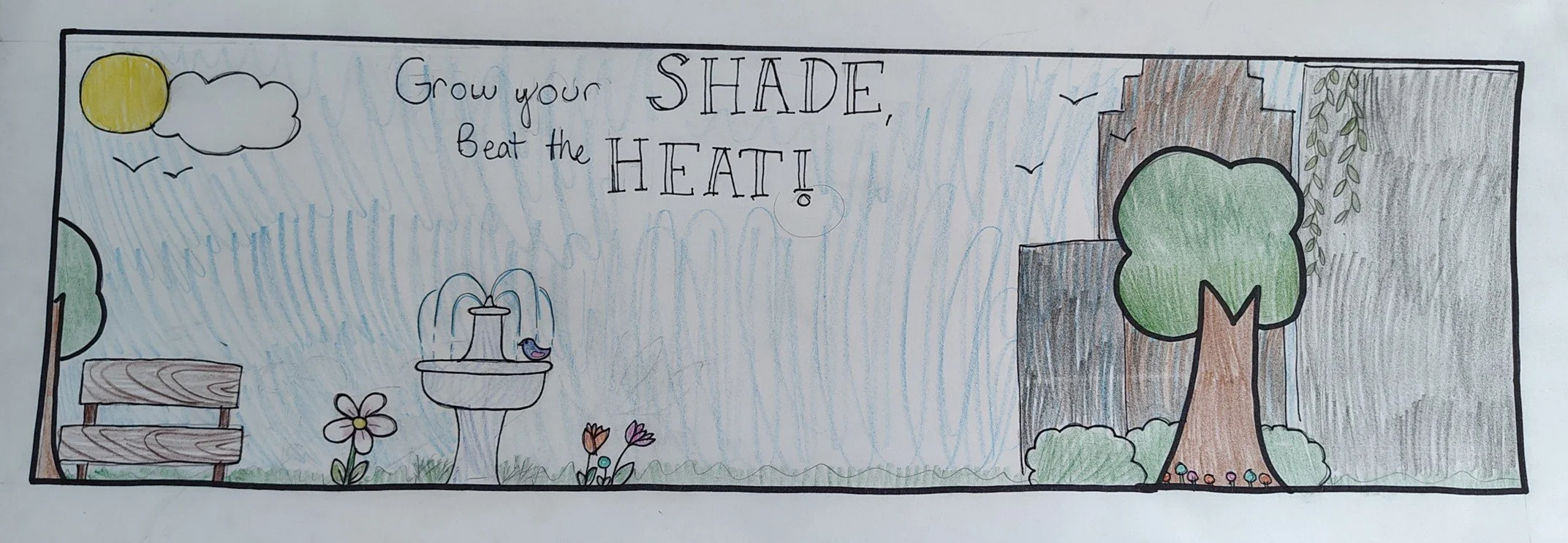
Mallory, a 5th grader from Great Bend, KS, is a Cool Science Runner-Up. Congratulations Mallory!
Mallory’s Artist Statement: “In my work, I want to tell others that growing trees can cool your communities. When I was working on my poster, nature’s flowers and trees inspired me to make it the way that it is. While my poster was in progress, I used my materials like I always do, sketch in pencil, trace in permanent marker, and color. I hope that from looking at my artwork, people will learn that planting trees can cool urban heat islands and your neighborhood just as I learned from doing this project. Nature’s plants and animals inspired my work.”
Middle School
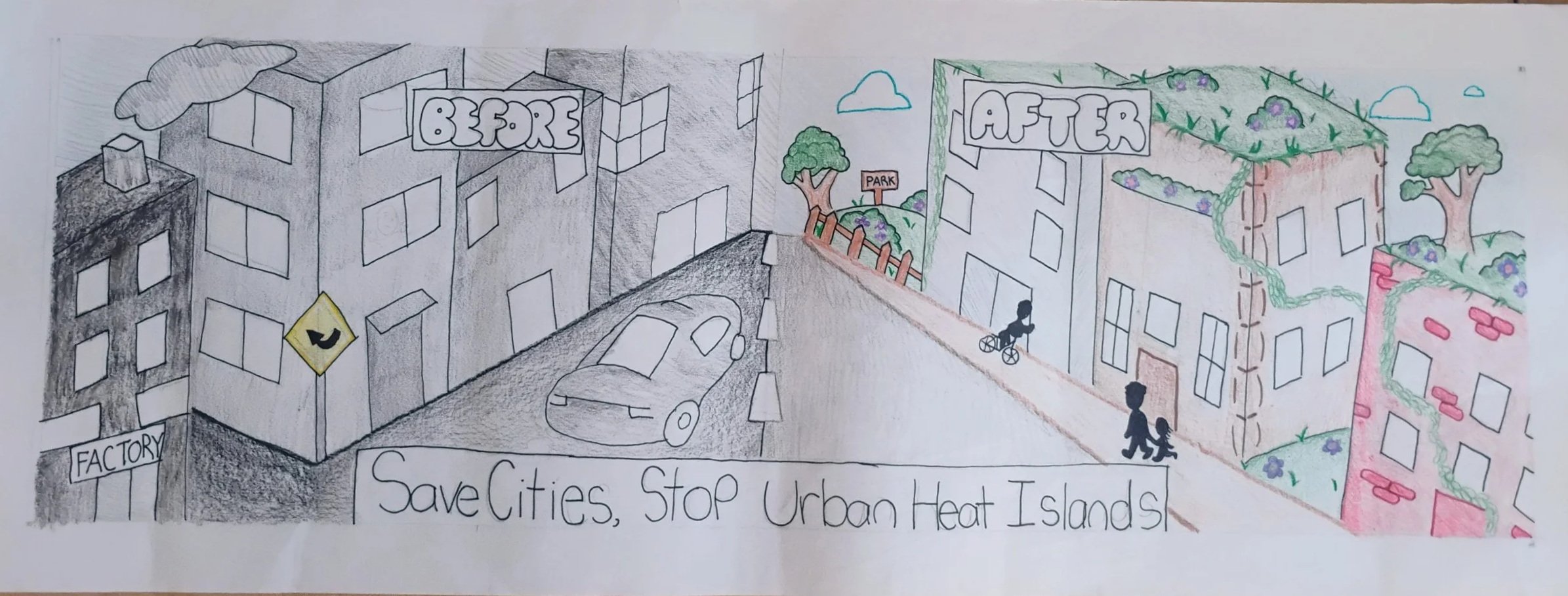
Nomeda, a 6th grader from Westford, MA, is a Cool Science Runner-Up. Congratulations Nomeda!
Nomeda’s Artist Statement: “As cities grow hotter each year, scientists and community leaders are urgently searching for smart ways to cool down urban heat islands and protect the people who live there. In urban cities such as Boston, all buildings, roads, and sidewalks are darkly colored, making them have a lower albedo (they don’t reflect light). All the dark colors absorb more heat. In addition, we are also burning lots of fossil fuels when we use cars and factories, which release greenhouse gasses like carbon dioxide, methane, as well as nitrous oxide. All the skyscrapers and buildings are so close together that the sun’s heat gets trapped and warms the city. To solve these problems, instead of using cars, we could use public transportation, carpool, or bike and walk. Also, we don't have many plants/greenery which would absorb carbon dioxide, a greenhouse gas. Plants also are important because they go through transpiration, providing cooler air. We could get more greenery, such as green roofs or plant trees in parks. We could try to spread out buildings and use lighter colors. By looking at my art work, I hope they will understand what is happening to the cities on our earth and how they can help. I hope people will learn that they can all help save the earth and be a part of this. In conclusion, cities are rapidly heating and we are the only ones who can stop this. We should take better care of cities and help save the earth!”
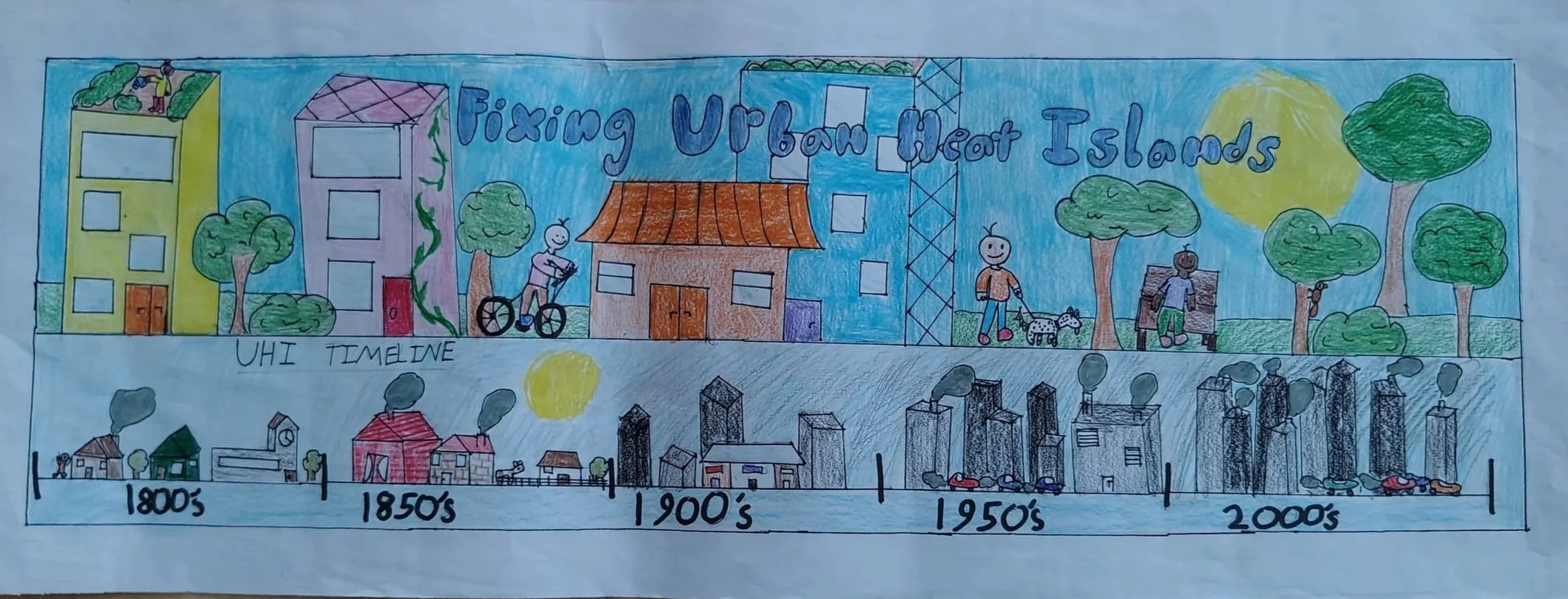
Anjali, a 6th grader from Westford, MA, is a Cool Science Runner-Up. Congratulations Anjali!
Anjali’s Artist Statement: “As cities become hotter each year, scientists and community leaders are searching for smart ways to help cool down urban heat islands and protect the people who live there. Urban areas are 1-7 degrees Fahrenheit hotter in the day and 2-5 degrees hotter in the night compared to rural places. This is because of the urban heat island effect. Urban heat islands are cities that are significantly hotter than its surrounding areas. There are lots of things that can cause urban heat islands. One is the color of the buildings, roads, and sidewalks. They are darker and have a very low albedo. Albedo is how much sunlight a color reflects. Another problem is the height of the buildings. The tall buildings in cities trap heat and stop it from rising into the atmosphere. Some solutions that we can implement are adding vegetation to rooftops, painting buildings lighter colors, and putting reflective coatings on them. Vegetation helps because it releases moisture and creates shade. They have also started replacing streets and cars with parks and biking. In New York City, it is 3-4 degrees hotter than it was in the 1800s. The temperatures in the 2000s have been higher than any other time in history. When looking at my artwork, I hope people learn what the urban heat island effect is and how to fix it. As cities continue to heat up, it’s important to add green roofs, reflective coatings, brighter colours, and more vegetation.
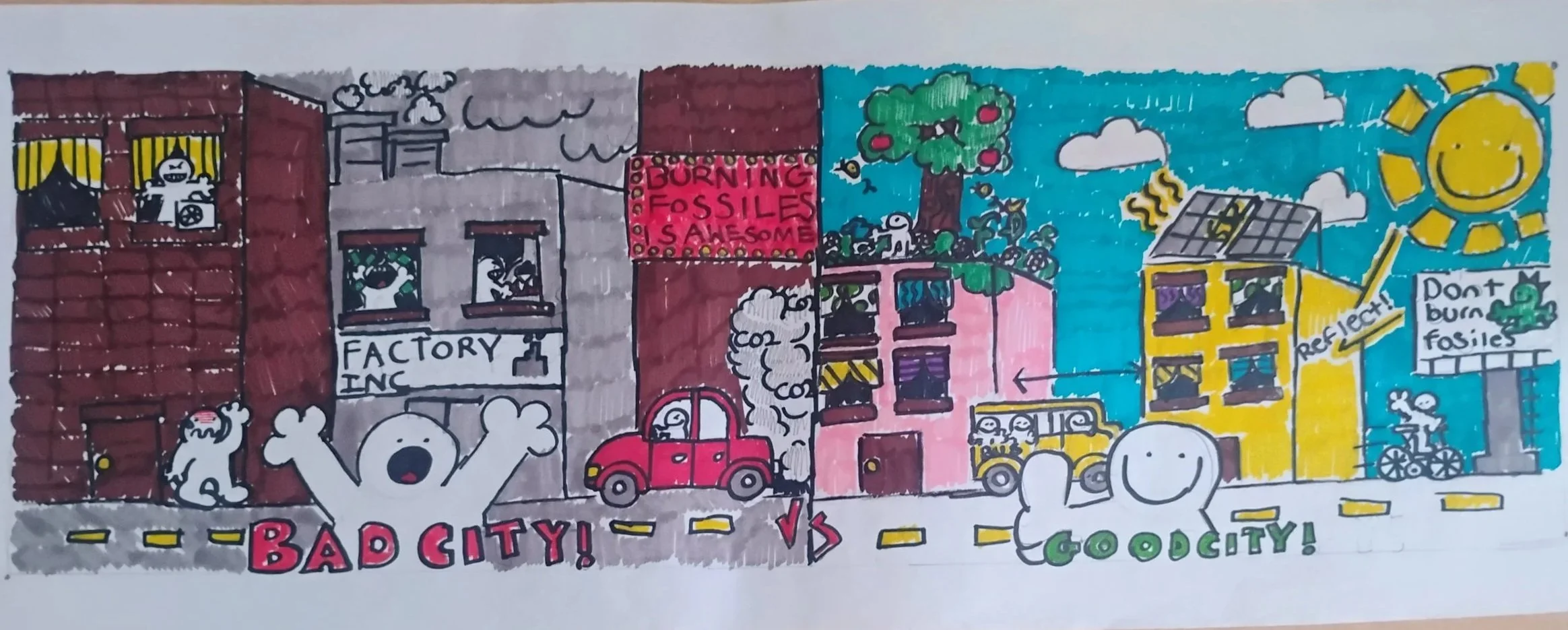
William, a 6th grader from Westford, MA, is a Cool Science Runner-Up. Congratulations William!
William’s Artist Statement: “As cities grow hotter each year, scientists and community leaders are urgently searching for smart ways to cool down urban heat islands and protect the people who live there. The earth is heating up from climate change. The most vulnerable places to climate change are cities. Cities trap heat with their tall buildings and greenhouse gases like Carbon Dioxide, Methane, and water vapor trap heat too, produce heat with all the power being used, and absorb heat with its dark architecture. Cities are 1 - 7 Fahrenheit at day and 2 - 5 Fahrenheit at night Fahrenheit hotter than normal areas. Extra heat can be dangerous, causing heat exhaustion making people pass out or can be fatal. Cities aren’t going to let climate change destroy them. Cities are combating the heat by withering down fossil fuel usage by using solar panels, making green spaces with plants that absorb sunlight, public transportation and bikes, and using more reflective colors which would boost the albedo levels and reflect the sunshine. With these changes we can lower the temperature in cities. By looking at my art work, I hope people will learn about the problem with climate change and urban heat islands and how it’s affecting cities and be aware. And if we don’t stop it now or try to lower the effect of it city folk might be in danger. To conclude, urban heat islands are putting cities in danger and cities are trying to combat them with solutions to make them cooler.”
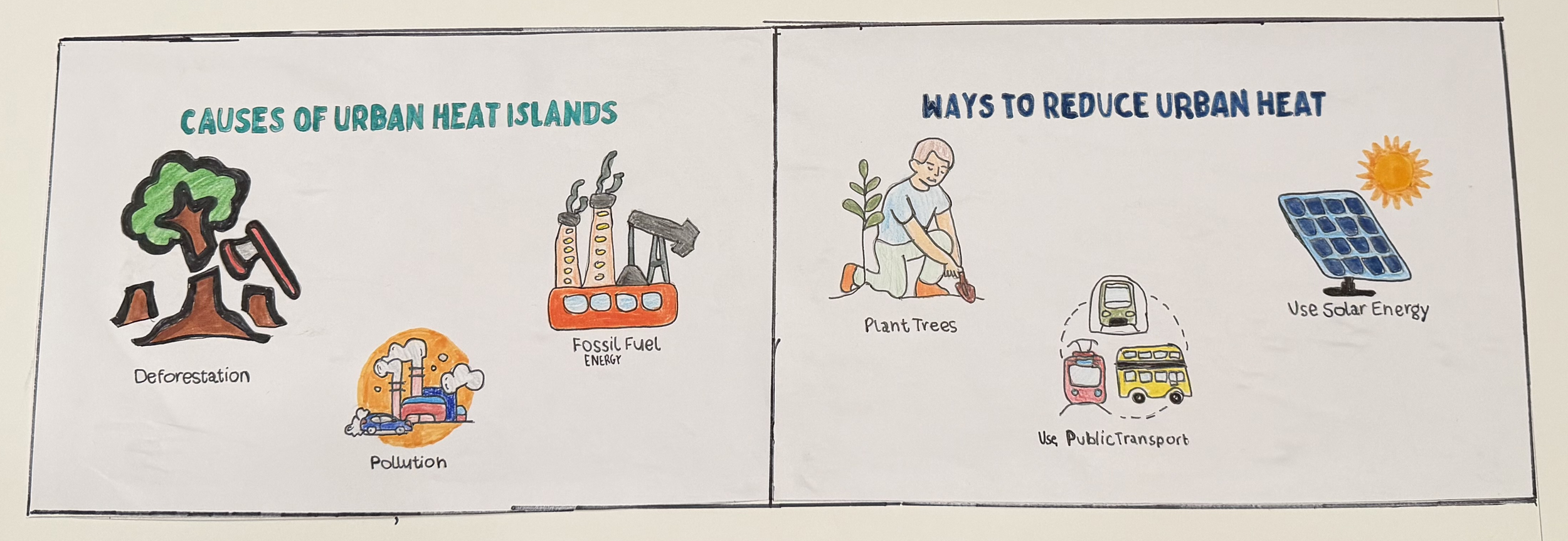
Tvisha, a 7th grader from Overland Park, KS, is a Cool Science Runner-Up. Congratulations Tvisha!
Tvisha’s Artist Statement: “My artwork addresses the question, “How can we lower temperatures in urban heat islands?” My drawing is divided into two sides to compare negative and positive impacts on urban environments. Urban areas are often very crowded and rely heavily on pollution from cars, factories, and fossil fuels, which causes temperatures to rise. The Causes of Urban Heat Islands side shows deforestation, factory and vehicle pollution, and fossil fuel energy use. These factors reduce oxygen, increase pollution, and trap heat in cities. Cars and factories release harmful emissions, while deforestation removes trees that would normally help cool the air. The Ways to Reduce Urban Heat side shows planting more trees, using solar energy, and relying on public transportation. Public transportation helps reduce the spread of pollution, planting trees provides shade and oxygen, and solar energy is eco-friendly and reduces heat-trapping emissions. Together, these actions help create a greener community and lower urban temperatures. I created my artwork this way to clearly compare negative and positive impacts and show how they affect urban heat. I used colors and symbols to make my message clear and easy to understand. I was inspired by observing that cities are often overcrowded and overheated, and I wanted to show that this problem can be fixed. This competition encouraged me to think differently about problems around us and helped me understand how small changes in urban design can make cities more livable, beautiful, and better for our planet.”
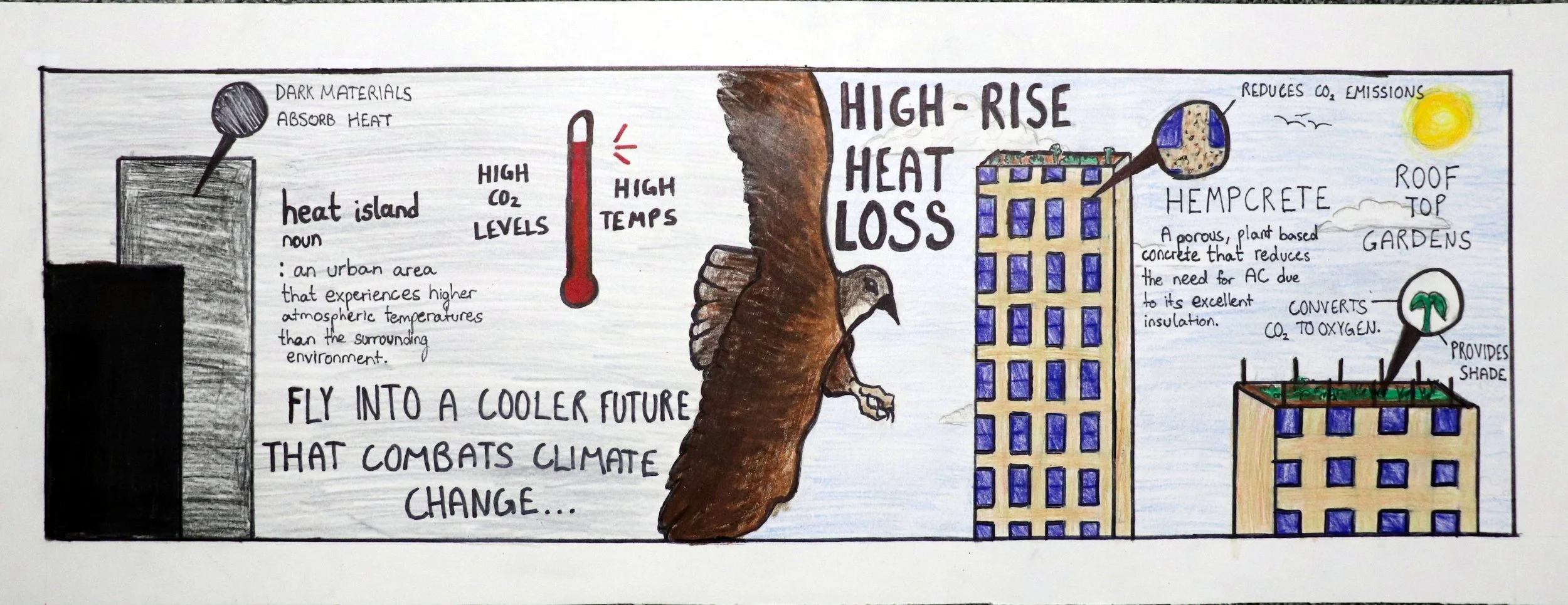
Zoya, a 8th grader from Chelmsford, MA, is a Cool Science Runner-Up. Congratulations Zoya!
Zoya’s Artist Statement: “I’m an 8th grader from Chelmsford, and the challenge question I chose for this year’s competition is, “How can we lower temperatures in urban heat islands?” I found a lot of interest in this subject area and researched many different ways to do this, including district heating and cooling and the promotion of public transit. Ultimately, I settled on two interesting approaches: the use of hempcrete in buildings and rooftop gardens. Hempcrete is a plant based concrete which reduces the need for AC. Rooftop gardens provide shade and replace carbon dioxide with oxygen. Less AC = less carbon dioxide, and less carbon dioxide means lower temperatures. I tried to appeal to my audience by using drab, bleak colors on one side of the canvas to highlight the negative effect regarding high carbon dioxide emissions in urban areas today. The other side features bright, optimistic shades where these methods were implemented. While not all of us may be builders or gardeners, I hope people remember that this is our Earth we’re living on. As of now, we don’t have a plan B. We don’t have a planet we can run away to if this one goes up in flames. And because of that, we need to take care of this planet- our planet - whether it’s by proposing new building plans for an upcoming apartment complex or simply picking a straw off the ground. Thank you for reading- for you and for our Earth.
High School
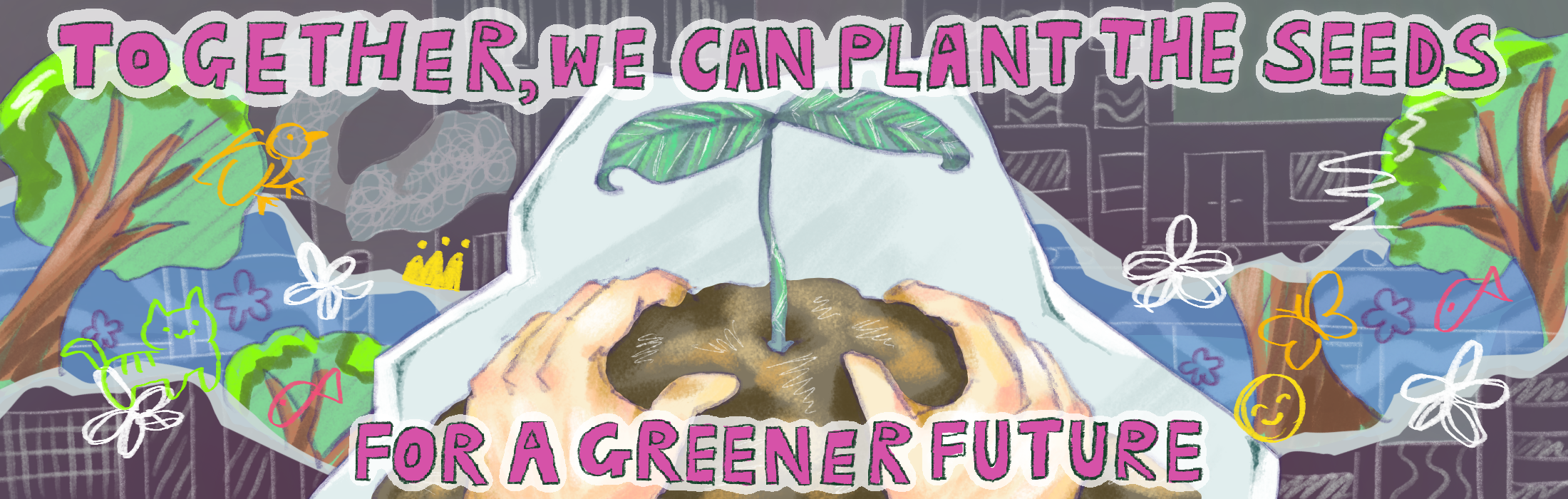
Nina, a 9th grader from Barnstable, MA, is a Cool Science Runner-Up. Congratulations Nina!
Nina’s Artist Statement: “One of the simplest ways to lower temperatures in urban heat islands is by planting trees. Temperatures drop up to 6 degrees once you are within a 10-minute walk of a park, and large parks can be up to 17 degrees cooler than surrounding city areas. Cooler environments reduce air conditioning and thus create energy savings for residents and businesses. Urban canopies also provide environmental benefits, including increased wildlife habitat, and improve community health by reducing noise and air pollution. Plus, trees make our neighborhoods more beautiful! After learning about everything that trees had to offer, I wanted to encourage the public to support planting trees. To do this, I combined two realities in my work. First, there is a dark background, where the lack of urban canopy caused higher temperatures, poor air quality, and a bleak landscape. In contrast, we see the potential of planting a new tree. By taking action now, we can build a brighter future, full of vibrant trees and life. I hope that people who see my work are inspired to plant their own trees. As a Massachusetts resident and Youth Commissioner of Barnstable, MA, I am proud of the work being done to fight climate change in my own community. Last year, Barnstable collaborated with Massachusetts Greening the Gateway Cities Program to plant trees in our local dog park. This program provides free trees to residents and business owners in environmental justice neighborhoods across Massachusetts, and I hope more people use it.”
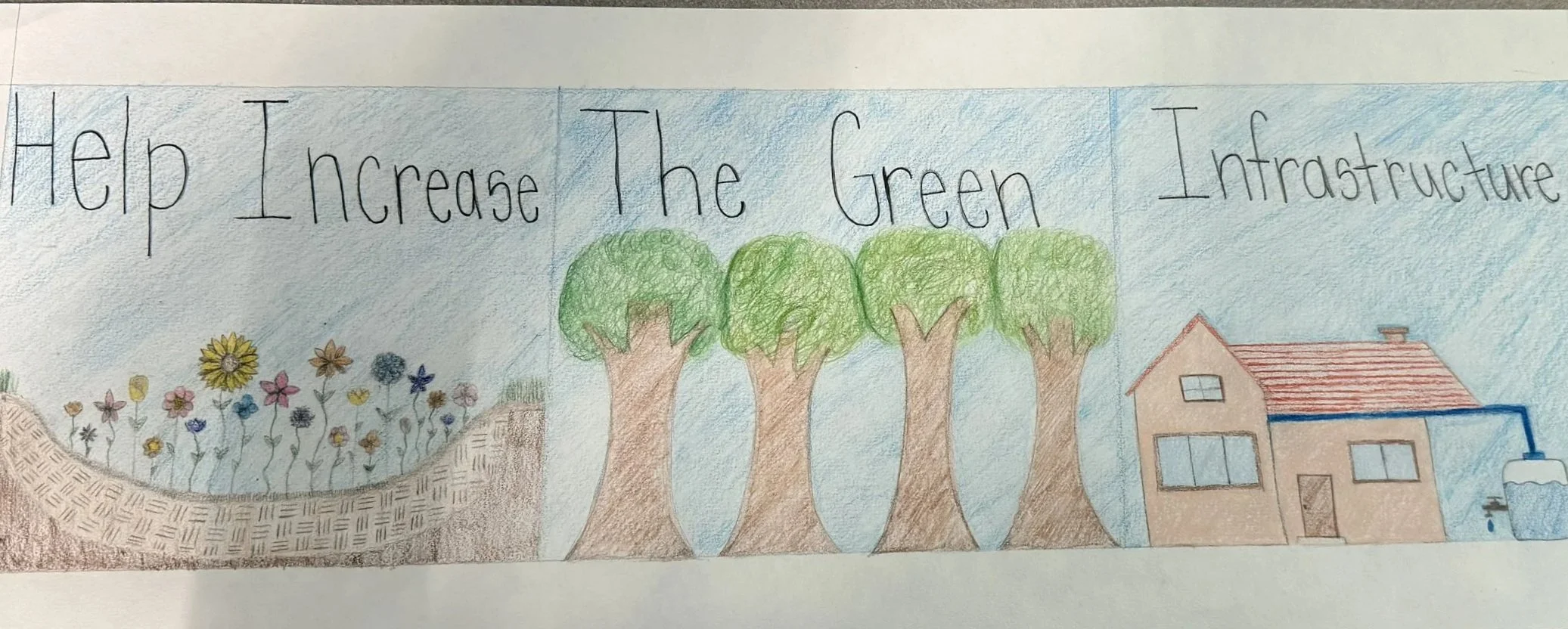
Sophia, a 9th grader from Cohasset, MA, is a Cool Science Runner-Up. Congratulations Sophia!
Sophia’s Artist Statement: “I addressed the challenge question in my artwork by showing three ways that we can increase the green infrastructure in urban heat islands. In my work, I am trying to show that by making rain gardens, planting more trees, and inputting rainwater harvesting in houses can help increase the green infrastructure. I created my artwork the way I did because I wanted to create detailed images of the helpful things we can do to increase the green infrastructure. The art competition encouraged me to work with colored pencils in a new way because I had to use them in a detailed way that makes the drawings look realistic. I hope that people look at my artwork and try to make an effort to do these things to help increase the green infrastructure in urban heat islands. I learned that creating rain gardens, planting many more trees, and making rainwater harvesting in homes can help decrease the amount of climate change in our world. My artwork inspired me to help more in my community to suppress the climate change happening around us.”
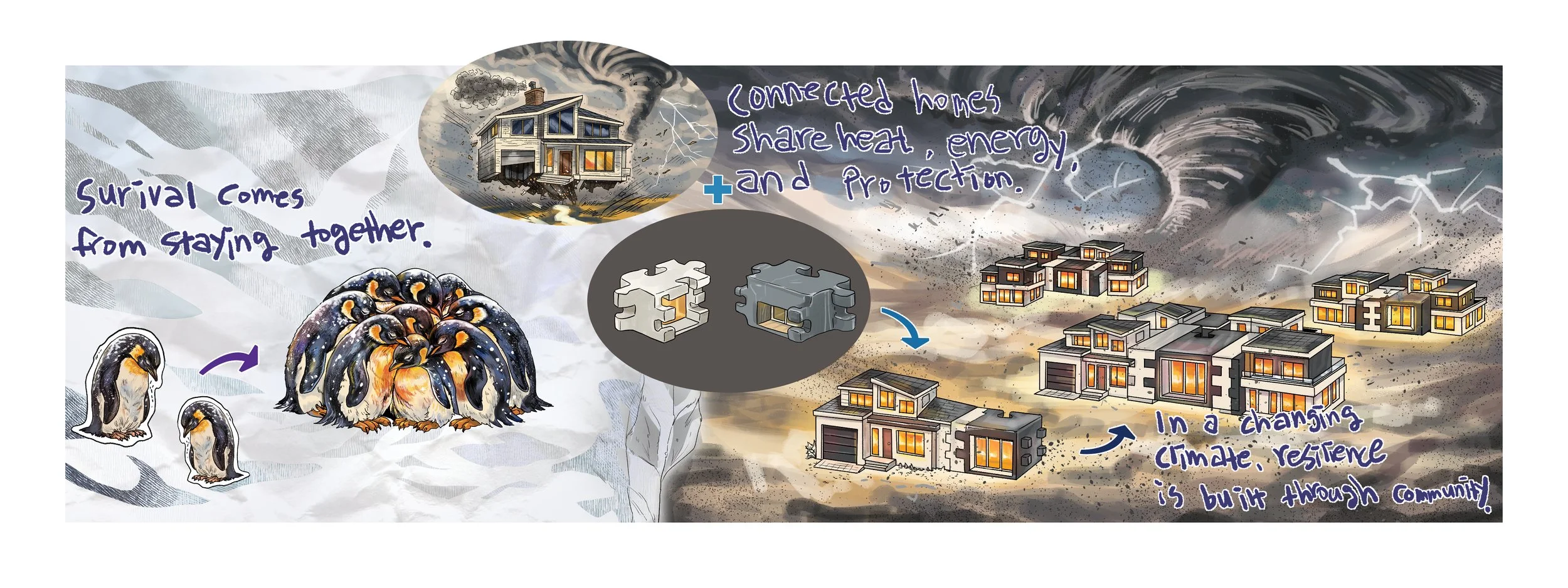
Jolie, a 10th grader from Irvine, CA, is a Cool Science Runner-Up. Congratulations Jolie!
Jolie’s Artist Statement: “The action of emperor penguins surviving in extreme cold conditions was the beginning of this work. Penguins closely adhere to each other and share body temperature, making the center of the colony much warmer than the outside. I tried to apply this natural way of survival to the structure of human housing. They believed that homes could no longer exist as completely isolated individual spaces as extreme weather conditions like typhoons and extreme colds become a daily routine due to climate change. Therefore, we designed a modular structure in which each house exists independently but combines with each other when necessary to share heat and a protective film. Houses are connected to respond to crises just as penguins survive by gathering their bodies. This work is also a question of individualistic lifestyles in the climate crisis. We can survive more effectively through cooperation and solidarity instead of enduring each crisis. Nature is already showing the most efficient solution, and penguin colony behavior is a scientific example. Through this work, I have learned that nature’s behavior can be a source of science and design, and I hope that people will rethink the ‘way of living together’ in the face of climate change.”
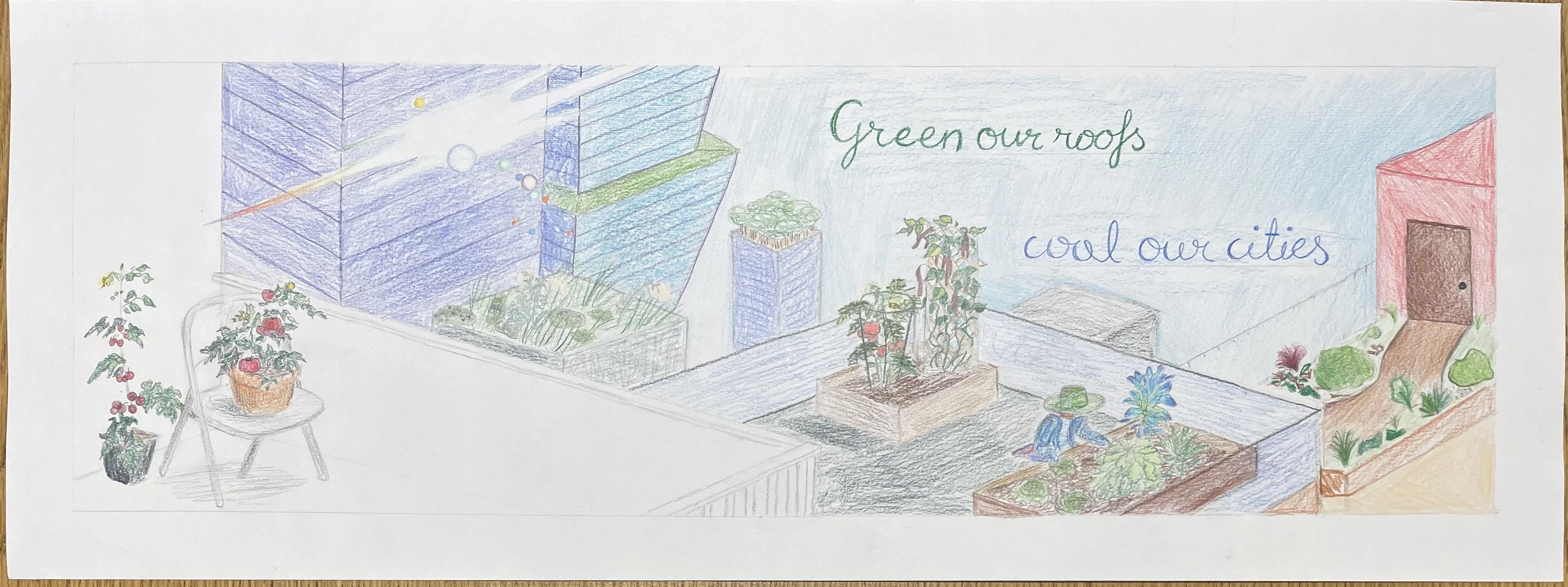
Eleanor & Anwen, 10th graders from Shutesbury & Conway, MA, are Cool Science Runners-Up. Congratulations Eleanor & Anwen!
Eleanor & Anwen’s Artist Statement: “The challenge we decided to address was urban heat islands. We found that rooftop gardens and green roofs have a considerable effect on the temperature of the surrounding air and the internal temperature of their buildings, saving energy on cooling and making cities more comfortable. I also feel that it’s especially important to have green spaces in cities for mental health and community health. In all the cities I’ve lived in, I’ve seen that people gravitate towards the community gardens, parks, and random trees, so I wanted to help promote more of those spaces in this small way. I chose to feature tomatoes because they are commonly grown in cities, and balcony gardens were an important bit of nature for me, growing up in cities. Hopefully, this artwork can inspire anyone, whether they can build a green roof or just start growing a garden, to bring more greenery into their life.”
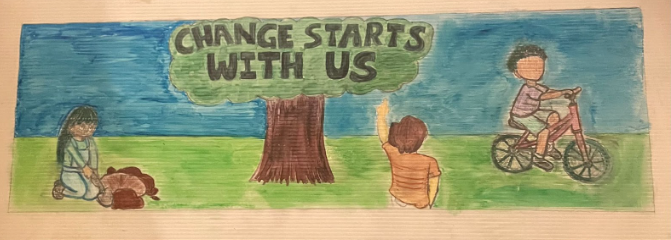
Keren, an 11th grader from Medford, MA, is a Cool Science Runner-Up. Congratulations Keren!
Keren’s Artist Statement: “For my art piece I focused on the question, “How are Massachusetts and its cities and towns preparing for climate change?” To answer this question, I chose to show how different people can use different ways, and take different forms of action to make our communities more sustainable. My art piece shows one child planting and one riding a bike instead of taking transportation that uses gas. In this piece I want to show that change can happen by taking small steps, and the only way for us to see change is if we make a move. I wanted this piece to be inspirational and positive, which is why I chose to use an outdoor setting with bright colors. I was mainly inspired by the transportation audit that we did and learning about how much gas one person can produce just from going to school. During this project I had to learn how to blend markers because the markers didn’t really work with the board that we had. I hope when people see this they realize that they can start change on their own, and it doesn’t take a big group of people.”